

CO2e assessment
Common starting point to size impact. Frequently relies on suboptimal data, such as spend data and carries a risk of carbon tunnel vision.
LCA assessment
Provides a more holistic view by analyzing impacts across multiple indicators, including effects on human health, the natural environment, and climate.
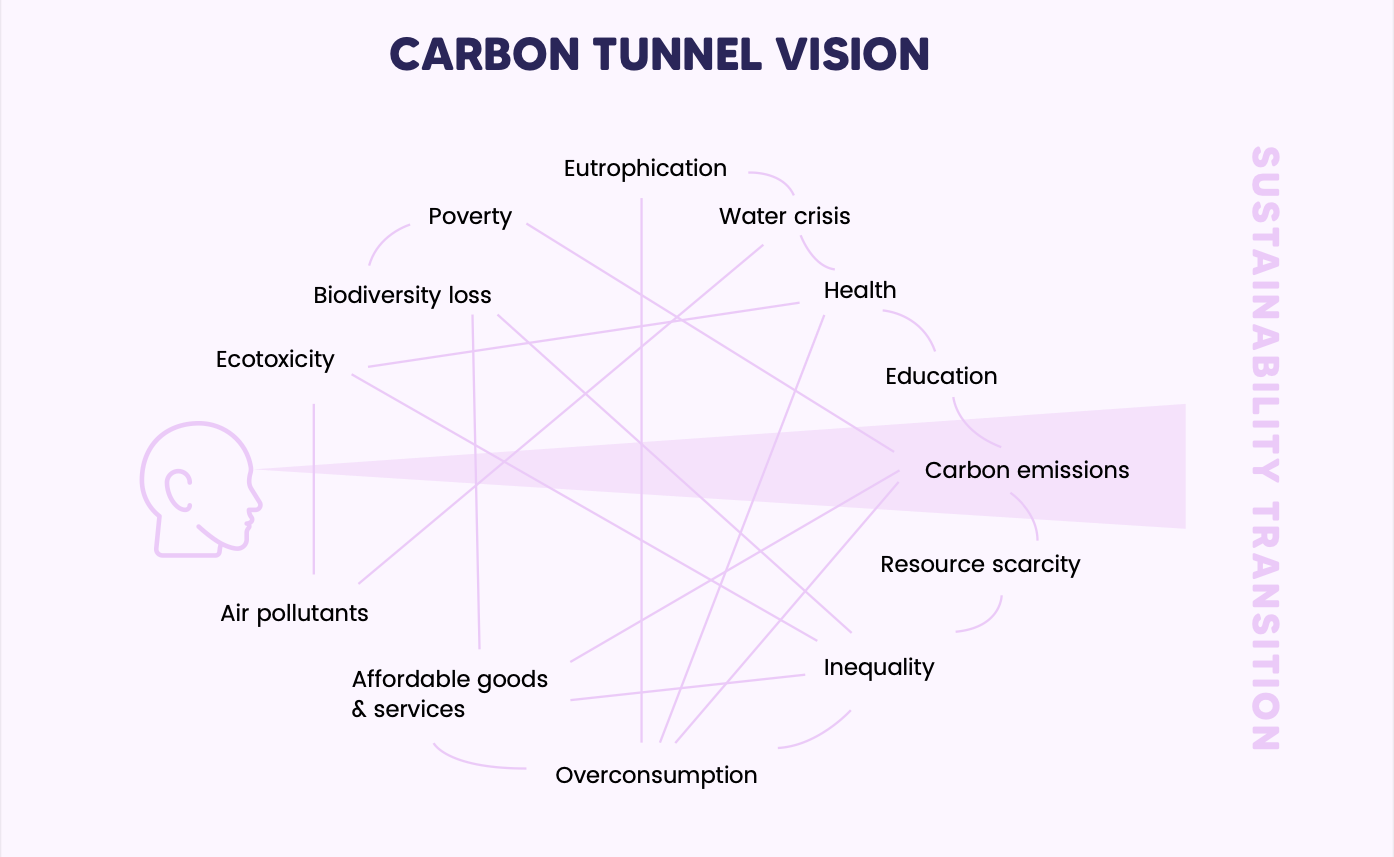
Benefits of Full LCA Over CO₂e
- Multi‑indicator view across human health, nature, and resource availability (not just climate)
- Higher data quality, combining primary data with reputable LCA databases
- Fair comparisons using a functional unit (impact per use, not per item)
- Operational insight: clear hotspots in materials, processes, logistics, energy, and end‑of‑life
- Credibility for declarations and public claims aligned with standards
Practical insight
Reducing material waste by even a few percentage points in manufacturing can lead to significant gains in:- Operational efficiency – less scrap, smoother workflows
- Cost savings – lower input costs and waste management expenses
- Environmental impact – reduced resource depletion and emissions
Where LCA drives decisions
- Procurement
- R&D
- Marketing
- Sales